AC Blowing Warm Air? Here's What to Do
Published February 7, 2026 — by AMW Cooling & Heating LLC
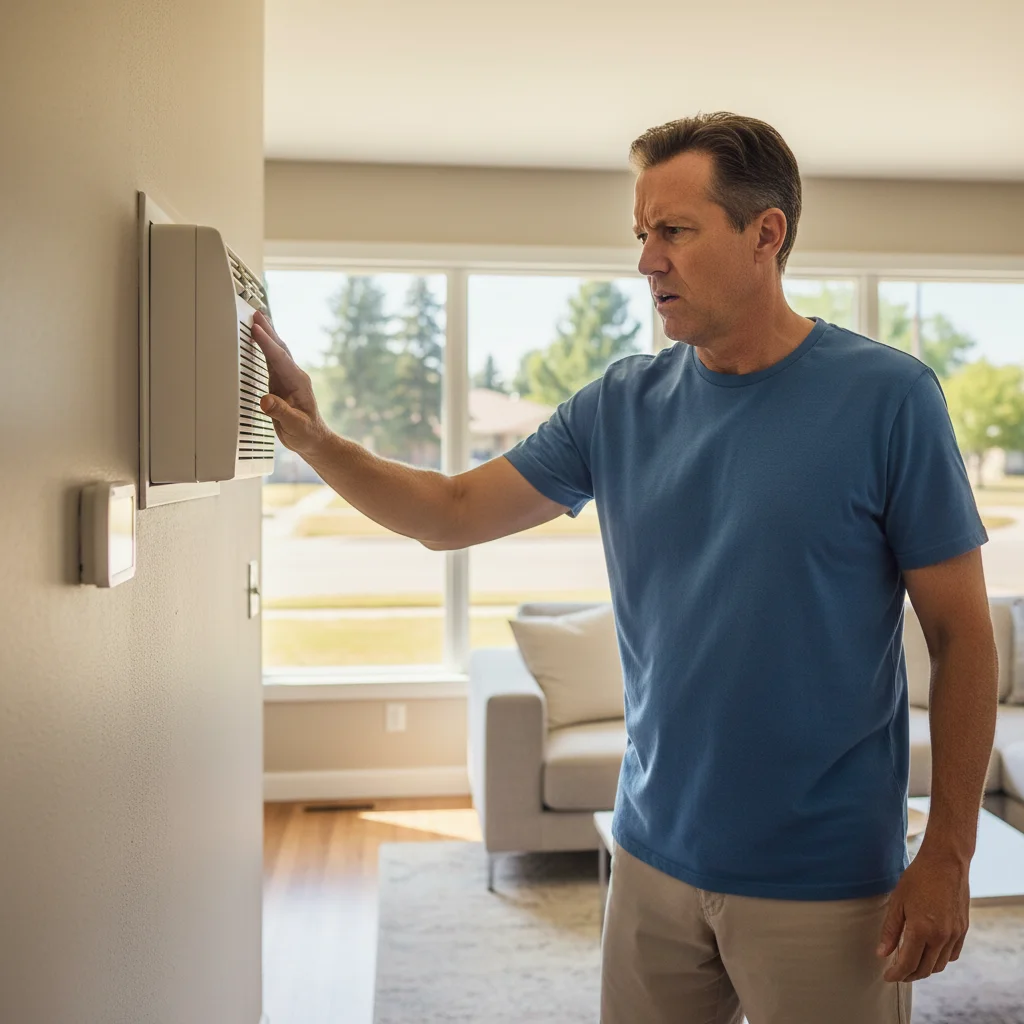
Few things are more frustrating than walking into your Conroe home on a hot summer afternoon and realizing the air coming from your vents is warm. Before you panic, know that there are several possible causes, and some of them are things you can check and fix yourself. Others require a professional, but understanding what is happening helps you communicate the issue clearly and potentially save money on the service call.
Step 1: Check Your Thermostat Settings
This may seem obvious, but thermostat issues account for a surprising number of service calls that end with a simple settings adjustment. Verify that your thermostat is set to "cool" rather than "heat" or "fan only." Also check that the fan setting is on "auto" rather than "on." When the fan is set to "on," it runs continuously even when the compressor is not actively cooling, which means you will feel room-temperature air blowing between cooling cycles. Switching to "auto" ensures the fan only runs when the system is actively producing cold air.
If you have a programmable or smart thermostat, verify that the scheduled settings have not been accidentally changed. Battery-powered thermostats can also malfunction when batteries are low, so replace the batteries if needed and see if that resolves the issue.
Step 2: Check the Air Filter
A severely clogged air filter can restrict airflow to the point where the evaporator coil freezes. When the coil is covered in ice, it cannot absorb heat from the air, and your system effectively stops cooling even though it is still running. Pull out the filter and inspect it. If it is visibly dirty or clogged, replace it.
If you suspect the coil may have frozen, turn the system to "fan only" for a few hours to allow the ice to melt. Place towels around the indoor unit in case of dripping. Once the ice has melted and you have installed a clean filter, turn the system back to cooling and see if normal operation resumes.
Step 3: Check the Circuit Breakers
Your HVAC system typically uses two separate breakers: one for the indoor unit (the air handler or furnace) and one for the outdoor unit (the condenser). It is possible for the indoor fan to run normally while the outdoor unit has tripped its breaker. When this happens, air circulates through your home but is never cooled because the compressor and outdoor fan are not operating.
Check your electrical panel for any tripped breakers and reset them. If the breaker trips again immediately or shortly after resetting, do not continue to reset it. A repeatedly tripping breaker indicates an electrical issue that requires professional diagnosis. Continuing to reset a tripping breaker can cause further damage or create a fire hazard.
Step 4: Inspect the Outdoor Unit
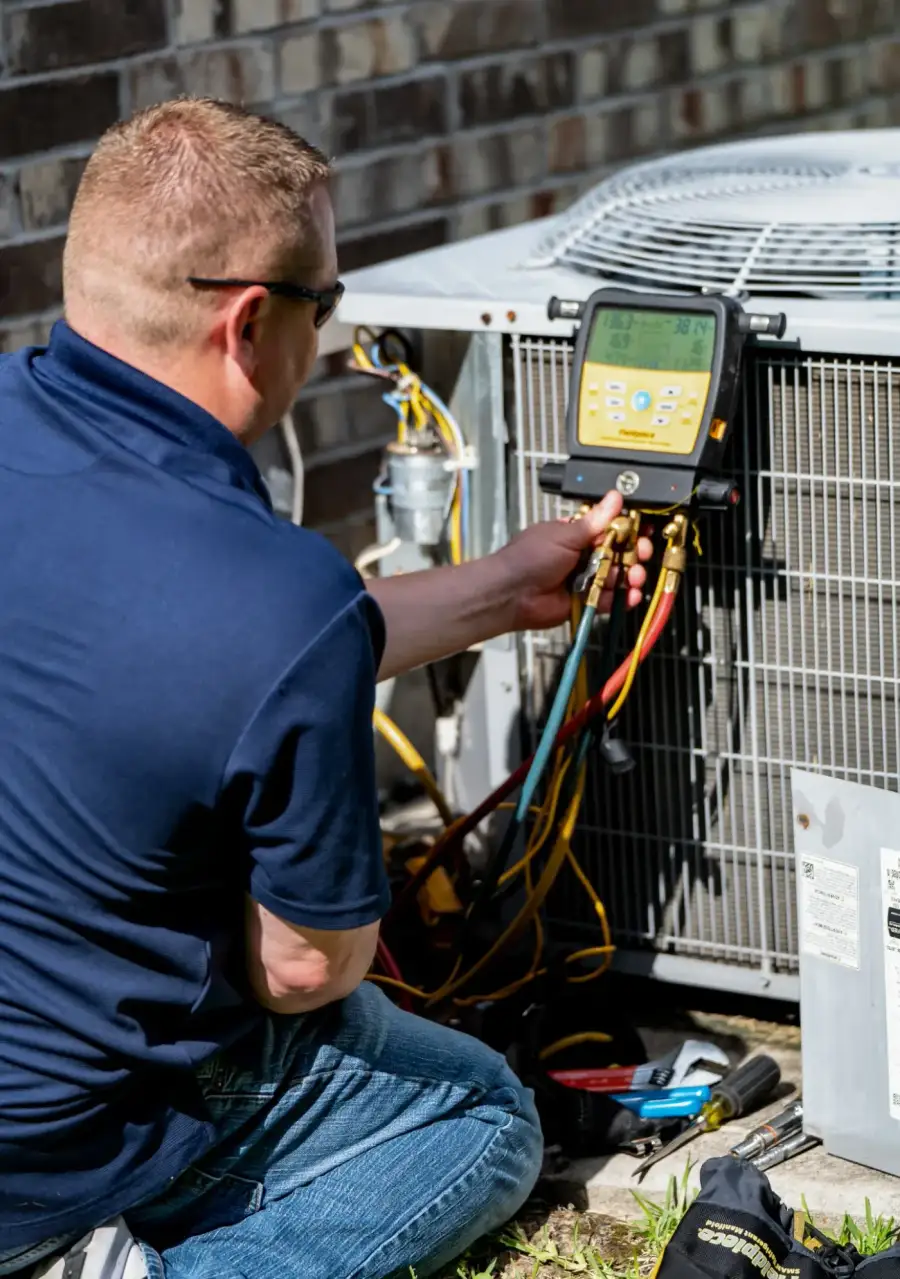
Go outside and look at your condenser unit. Is it running? You should hear the compressor humming and see the fan spinning. If the unit is completely silent and the breaker is on, there may be a failed contactor, capacitor, or another electrical component preventing the unit from starting.
If the unit is running but the fan is not spinning, the fan motor or its capacitor may have failed. If the fan is spinning but the compressor is not running, the compressor itself or its starting components may be the issue. These components require professional replacement.
Also check whether the outdoor unit is excessively dirty or blocked by vegetation, debris, or other obstructions. A severely dirty condenser coil cannot dissipate heat effectively, which causes the system to produce warmer air than it should. Clear any obstructions and gently rinse the coils with a garden hose if they are visibly dirty.
Step 5: Look for Refrigerant Leak Signs
Low refrigerant is one of the most common causes of an AC blowing warm air, and it is also one that requires professional attention. Your system does not consume refrigerant; it circulates it in a closed loop. If refrigerant is low, it means there is a leak somewhere in the system.
Signs of low refrigerant include ice forming on the refrigerant line (the larger, insulated copper pipe running from the outdoor unit to the indoor unit), hissing or bubbling sounds near the indoor unit, and the system running continuously without reaching the set temperature. Only a licensed HVAC technician can properly diagnose and repair a refrigerant leak and recharge your system to the correct level.
When to Call a Professional
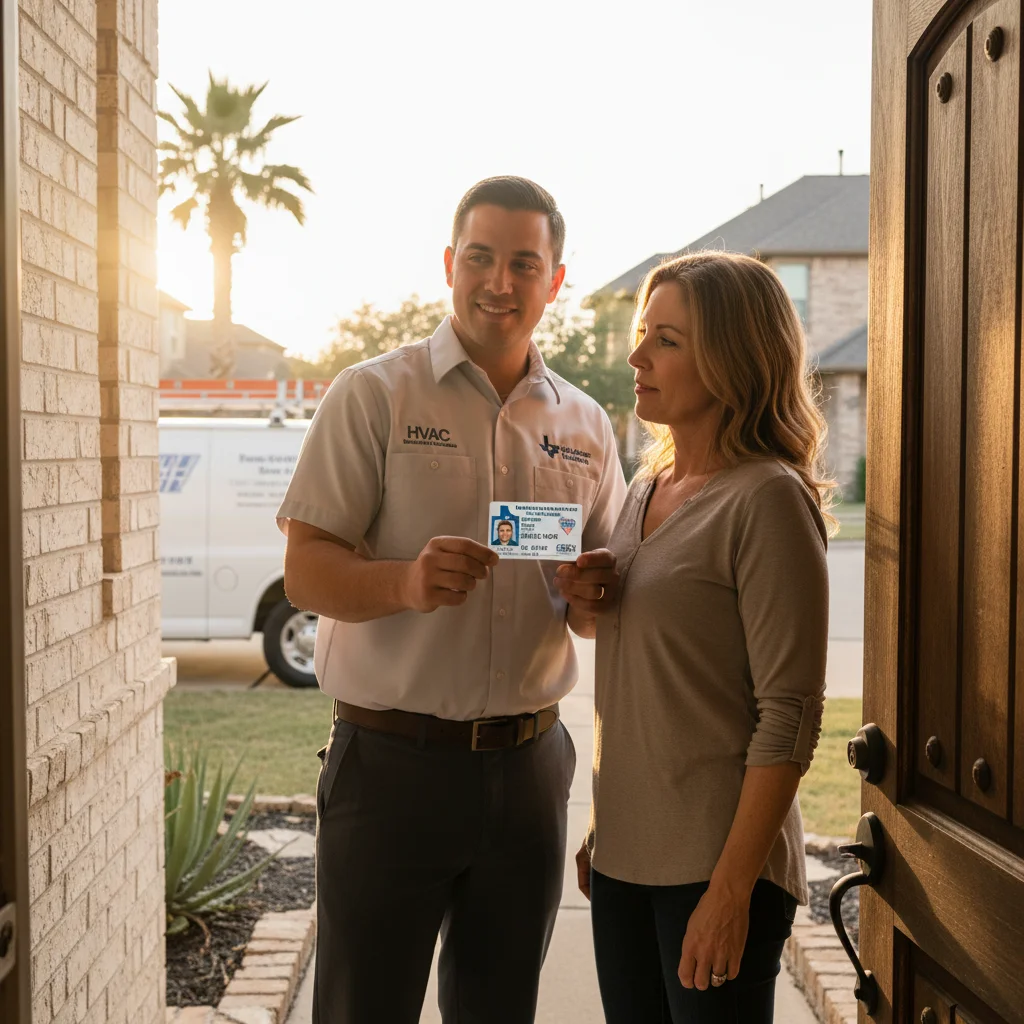
If you have checked the thermostat, filter, breakers, and outdoor unit and the problem persists, it is time to call for professional service. Issues like low refrigerant, failed compressors, bad capacitors, malfunctioning reversing valves, or electrical control failures all require specialized tools and expertise to diagnose and repair safely.
In Montgomery County's summer heat, operating without AC is not just uncomfortable; it can be a health risk, especially for children, elderly family members, and pets. Do not delay calling for help when simple troubleshooting does not resolve the issue.
Prevent Future Issues With Regular Maintenance
Most AC problems that cause warm air are preventable with regular professional maintenance. During a tune-up, technicians check refrigerant levels, clean coils, test electrical components, and verify that your entire system is operating within normal parameters. Catching a small refrigerant leak or a failing capacitor during a routine visit is far less expensive and stressful than dealing with a complete cooling failure on a 100-degree afternoon.
At AMW Cooling & Heating, we recommend scheduling maintenance in early spring before the heat arrives. Our technicians are experienced with the specific challenges that Conroe's climate presents and can identify potential issues before they leave you sweating.
Call AMW Cooling & Heating for Fast AC Repair
When your AC is blowing warm air and troubleshooting has not resolved it, AMW Cooling & Heating is ready to help. We provide prompt, professional AC repair service throughout Conroe, The Woodlands, Spring, Magnolia, Willis, Montgomery, and all of Montgomery County.
Call us at (936) 331-1339 to schedule your repair. We will diagnose the issue, explain your options, and get your home comfortable again as quickly as possible.