Dryer Vent Cleaning: Prevent Fires and Save Money
Published February 12, 2026 — by AMW Cooling & Heating LLC
Your clothes dryer is one of the most frequently used appliances in your home, and it is also one of the most overlooked when it comes to maintenance. The U.S. Fire Administration reports that clothes dryers are responsible for nearly 16,000 home fires each year, and the leading cause is failure to clean the dryer vent. For Conroe homeowners, where high humidity and frequent dryer use go hand in hand, staying on top of dryer vent maintenance is not optional. It is essential for your family's safety and your wallet.
Why Dryer Vents Clog and Why It Matters
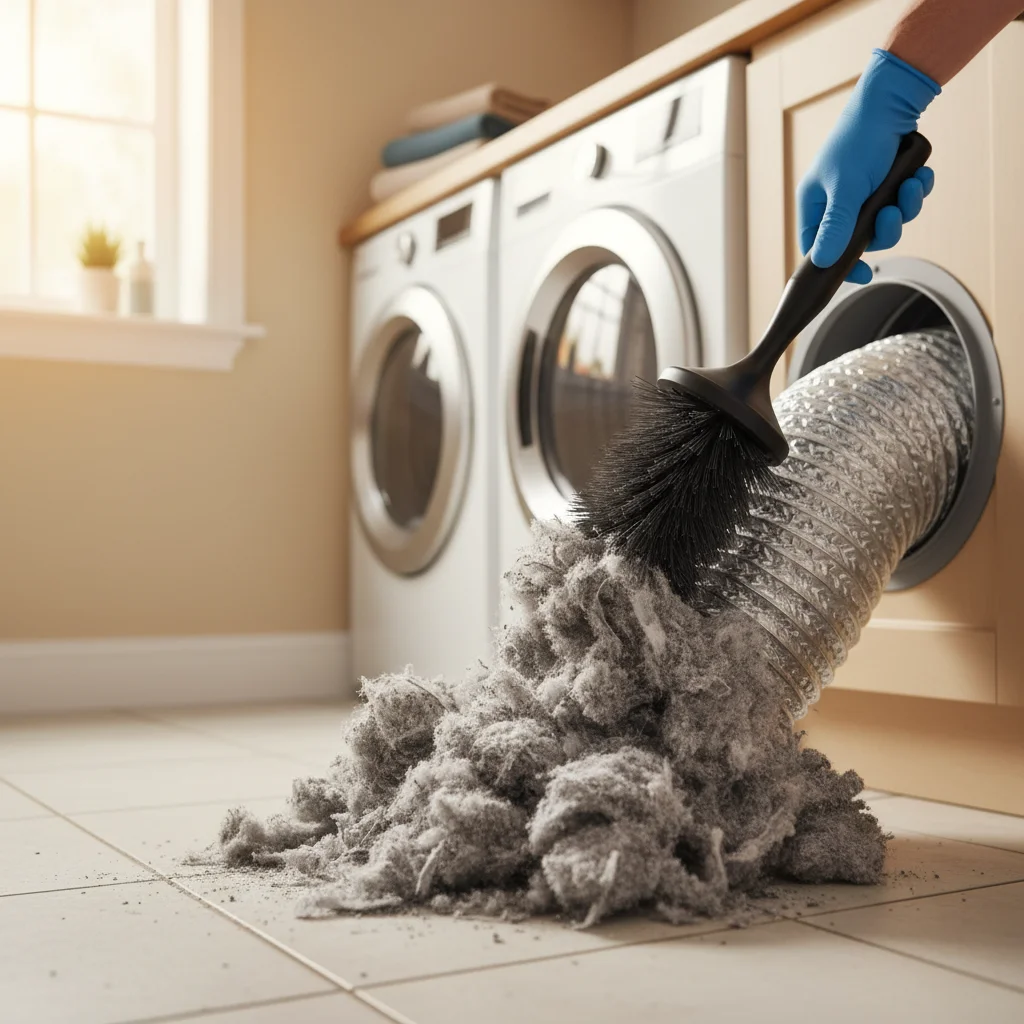
Every time you run your dryer, small fibers and lint escape the lint trap and enter the vent ductwork that leads from your dryer to the outside of your home. Over time, this lint accumulates along the walls of the vent, at bends and elbows, and near the exterior vent opening. The buildup restricts airflow, trapping hot, moist air inside the vent and the dryer itself.
Lint is highly flammable. When it accumulates inside a vent that is carrying air heated to 125 to 135 degrees Fahrenheit, the conditions for ignition are present. A spark from the dryer's heating element, a malfunction in the thermostat, or even excessive heat from restricted airflow can ignite the lint, and once a dryer vent fire starts, it can spread through walls and into the attic before you realize what is happening.
In Montgomery County, where many homes have longer vent runs through walls and attics, the risk is amplified. The longer the vent, the more surface area for lint to accumulate and the harder it is for airflow to push debris out naturally.
Warning Signs Your Dryer Vent Needs Cleaning
Recognizing the warning signs early can prevent a fire and save you money on energy. Pay attention to these indicators.
Clothes take longer than one cycle to dry. If loads that used to dry in 45 minutes now take 60, 75, or even require a second cycle, restricted vent airflow is the most likely cause. The dryer cannot exhaust moisture effectively, so clothes stay damp.
The dryer or laundry room feels excessively hot. When the vent is clogged, heat cannot escape and builds up in and around the dryer. If the top of your dryer is hot to the touch or the laundry room temperature rises noticeably during a cycle, the vent needs attention.
You smell something burning. Lint has a distinct burning smell when it overheats. If you notice this odor during or after a dryer cycle, stop using the dryer immediately and have the vent inspected. This is a direct fire hazard warning.
Lint is visible around the exterior vent opening. Check the vent where it exits your home. If you see lint accumulation around or inside the opening, or if the vent flap does not open when the dryer is running, airflow is severely restricted.
Your energy bills have increased. A dryer working against a clogged vent uses significantly more energy per load. If your electricity or gas bills have risen without a clear explanation, your dryer vent could be part of the problem.
The Financial Impact of a Clogged Vent
Beyond the fire risk, a clogged dryer vent costs you money in several ways. First, extended drying times mean higher energy bills. Running your dryer for an extra 30 to 45 minutes per load, multiplied by several loads per week, adds up to hundreds of dollars in wasted energy annually.
Second, the added stress on your dryer's components shortens its lifespan. Heating elements burn out faster, thermostats fail sooner, and motors wear out from extended run times. The average dryer costs $800 to $1,500 to replace, so premature failure due to a clogged vent is an expensive consequence of skipped maintenance.
Third, if a fire does occur, the property damage, insurance complications, and personal losses are immeasurable. Professional dryer vent cleaning costs a fraction of any of these outcomes and takes about an hour to complete.
How Often Should You Clean Your Dryer Vent?
The National Fire Protection Association recommends cleaning your dryer vent at least once a year. However, for Conroe families with higher dryer usage, such as large households, families with children, or homes where the dryer runs daily, cleaning every six to nine months is advisable.
Homes with longer vent runs, vents that include multiple turns or elbows, or vents that run vertically through the roof should be cleaned more frequently, as these configurations trap lint more readily and are harder for natural airflow to keep clear.
Why Professional Cleaning Is Worth It
While cleaning the lint trap after every load is essential (and you should absolutely do this), it only captures about 75 percent of the lint your dryer produces. The remaining 25 percent enters the vent system where it accumulates over time. Reaching this buildup requires specialized equipment that most homeowners do not have.
Professional dryer vent cleaning uses rotary brush systems that travel the full length of the vent, dislodging lint from walls and bends, combined with high-powered vacuums that capture the debris. A professional can also inspect the vent for damage, disconnections, improper materials like plastic or foil flex duct that should be replaced with rigid metal, and signs of pest intrusion.
AMW Cooling & Heating provides thorough dryer vent cleaning throughout Conroe, The Woodlands, Spring, and Montgomery County. Our technicians use professional-grade equipment to ensure your vent system is completely clear and operating safely.
Simple Steps to Reduce Lint Buildup Between Cleanings
While professional cleaning is necessary, there are steps you can take to minimize lint accumulation between service visits. Clean the lint trap before or after every single load. Do not skip this step. Occasionally wash the lint trap with soap and water to remove residue from dryer sheets that can clog the mesh and reduce its effectiveness. Periodically check the exterior vent opening to ensure it is clear of lint, debris, or obstructions. Avoid overloading your dryer, as overfull loads produce more lint and take longer to dry. Use the appropriate heat setting for each load type, as excessively high heat can cause more fiber shedding.
Protect Your Home and Family
Dryer vent cleaning is one of the simplest, most affordable home maintenance tasks with one of the highest returns in safety and savings. Do not let a preventable fire risk or unnecessary energy waste go unaddressed.
Call AMW Cooling & Heating at (936) 331-1339 to schedule your dryer vent cleaning. We serve Conroe, The Woodlands, Spring, Magnolia, Willis, Montgomery, and all of Montgomery County.