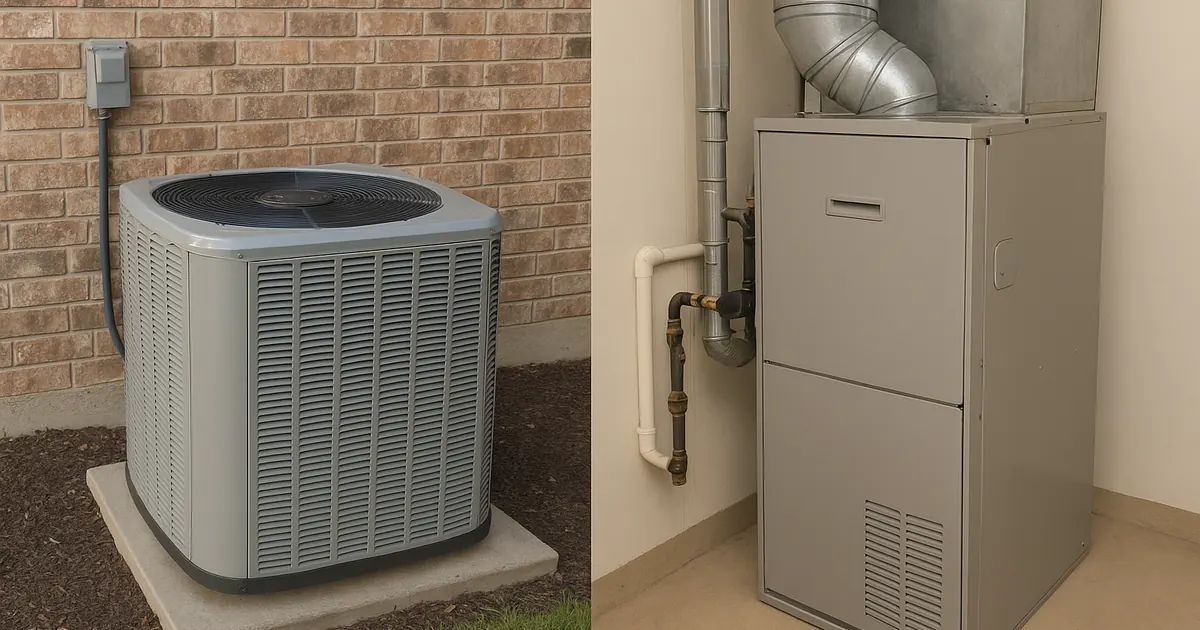
Heat Pump vs. Furnace: Which Heating System is Right for Your Conroe Home?
When temperatures drop in Conroe, you need reliable heating to keep your family comfortable. But with multiple heating options available, how do you choose the right one? The heat pump versus furnace debate has intensified in recent years as heat pump technology has improved dramatically, making this decision more relevant than ever for Texas homeowners.
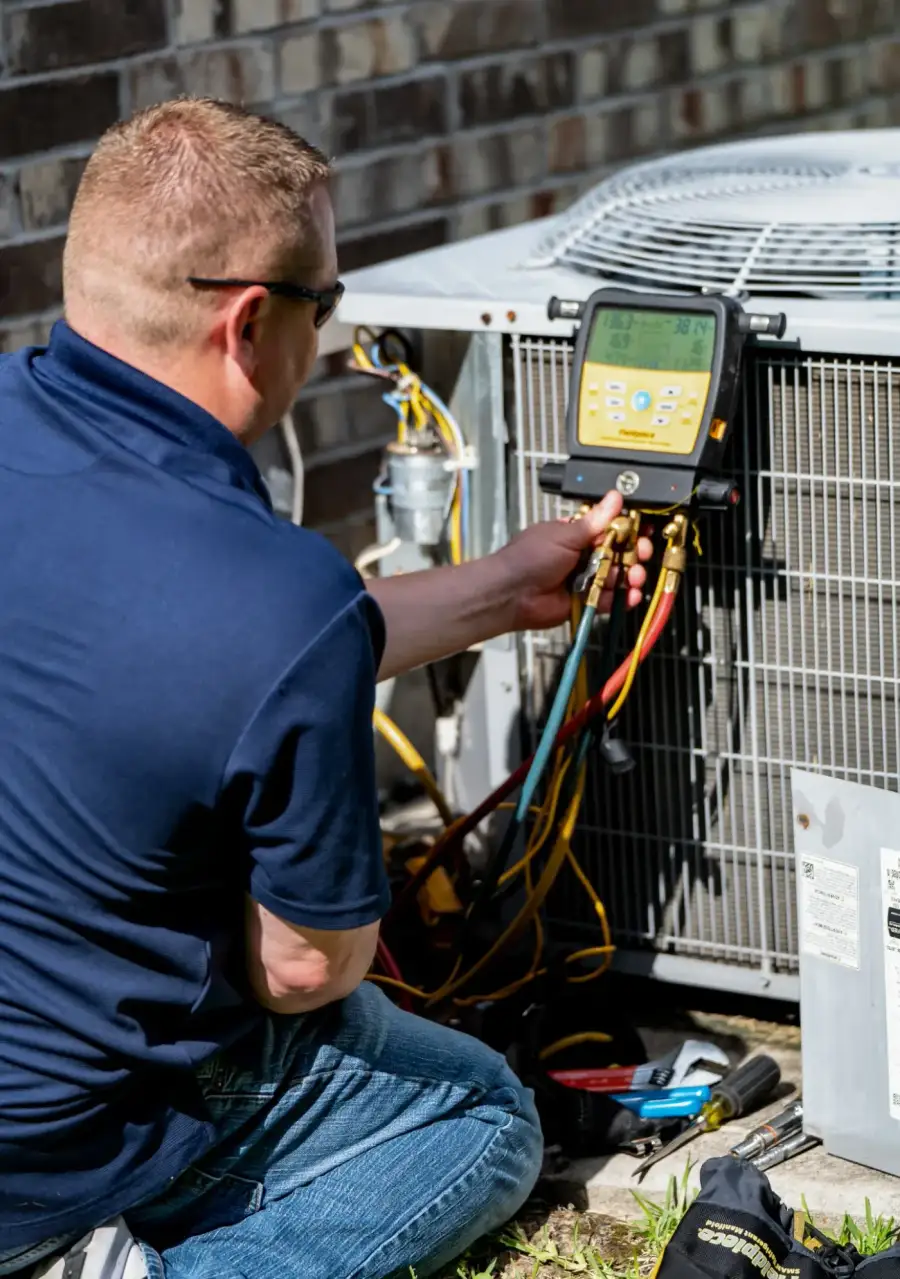
At AMW Cooling & Heating, we install and service both heat pumps and furnaces throughout Montgomery County. We've helped hundreds of homeowners make this important decision based on their specific situations. This guide will help you understand the differences, benefits, and limitations of each option so you can make an informed choice.
Ready to discuss heating options for your home? Call AMW Cooling & Heating at (936) 331-1339 for a free consultation.
How Heat Pumps Work
A heat pump is essentially an air conditioner that can reverse its operation to provide heating. Rather than generating heat through combustion, it moves heat from one location to another.
Heating Mode
During winter, a heat pump extracts heat from outdoor air and transfers it inside your home. This might seem impossible when it's 40°F outside, but even cold air contains heat energy. The refrigerant in your heat pump absorbs this heat, compresses it to increase temperature, and releases it inside your home.
Modern heat pumps can extract heat efficiently even when outdoor temperatures drop to 25-30°F. Below these temperatures, efficiency decreases, and most systems switch to backup electric resistance heating.
Cooling Mode
In summer, the process reverses. The heat pump extracts heat from your indoor air and transfers it outside—exactly how a traditional air conditioner works. In fact, in cooling mode, a heat pump IS an air conditioner.
Types of Heat Pumps
Air-source heat pumps are the most common type. They transfer heat between your home and the outdoor air. These are what most people mean when they say "heat pump."
Mini-split heat pumps (also called ductless systems) operate on the same principle but deliver conditioned air directly into rooms without ductwork. These work well for additions, garages, or homes without existing ducts.
Geothermal heat pumps transfer heat between your home and the ground, which maintains a relatively constant temperature year-round. These are highly efficient but significantly more expensive to install.
How Furnaces Work
Furnaces generate heat by burning fuel—typically natural gas in the Conroe area, though propane and oil furnaces exist. The combustion process heats a metal component called a heat exchanger, and air blowing across this exchanger warms before distributing throughout your home via ductwork.
Gas Furnace Efficiency
Furnace efficiency is measured by Annual Fuel Utilization Efficiency (AFUE), expressed as a percentage. An 80% AFUE furnace converts 80% of fuel energy into heat; 20% escapes up the flue.
Modern high-efficiency furnaces achieve 90-98% AFUE, extracting nearly all available heat from combustion. These condensing furnaces recover heat from exhaust gases that older models waste.
Furnace Categories
Single-stage furnaces operate at full capacity whenever they run. They're the simplest and least expensive option but cycle on and off more frequently.
Two-stage furnaces have high and low settings. They run on low for most conditions, switching to high only during extreme cold. This provides more consistent temperatures and quieter operation.
Variable-speed or modulating furnaces adjust capacity continuously to match heating needs precisely. These premium systems offer the best comfort and efficiency but cost significantly more upfront.
Heat Pump Advantages in Conroe's Climate
Conroe's climate makes heat pumps an attractive option for many homeowners. Here's why:
Excellent Efficiency in Mild Winters
Heat pumps shine when outdoor temperatures stay above 35-40°F—which describes most of our winter days in Conroe. During these conditions, heat pumps deliver 2-3 units of heat for every unit of electricity consumed. That's 200-300% efficiency compared to electric resistance heating at 100%.
Our average January low is around 40°F, and temperatures below freezing occur only occasionally. This means a heat pump can handle 80-90% of our heating needs at peak efficiency.
One System for Heating and Cooling
A heat pump replaces both your furnace AND air conditioner with a single outdoor unit. This simplifies maintenance (one system to service instead of two) and can reduce installation costs when replacing both systems.
Lower Operating Costs for All-Electric Homes
If your home doesn't have natural gas service, a heat pump dramatically reduces heating costs compared to electric resistance heating (space heaters, electric furnaces, baseboard heaters). The efficiency difference means you'll pay roughly one-third to one-half as much to heat your home.
No Combustion Concerns
Heat pumps don't burn fuel, eliminating concerns about:
- ✓Carbon monoxide leaks
- ✓Gas line problems
- ✓Combustion air requirements
- ✓Heat exchanger cracks
- ✓Flue gas venting
Reduced Carbon Footprint
If environmental impact matters to you, heat pumps powered by grid electricity generally produce fewer emissions than burning natural gas—especially as the Texas grid incorporates more renewable energy.
Furnace Advantages in Conroe
Gas furnaces remain popular in our area for good reasons:
Superior Performance During Cold Snaps
When Arctic fronts push temperatures into the 20s or teens (like the infamous February 2021 freeze), furnaces excel. Gas heating isn't affected by outdoor temperature—a furnace produces the same heat output whether it's 40°F or 10°F outside.
Heat pumps struggle in these conditions, relying on inefficient backup heating. If you remember shivering through past cold snaps, a furnace provides peace of mind.
Lower Equipment Costs
Gas furnaces typically cost 20-40% less than equivalent heat pumps to purchase and install. This upfront savings matters for budget-conscious homeowners, though operating costs may offset this over time.
Warmer Supply Air
Furnaces typically deliver air at 120-140°F, noticeably warm against your skin. Heat pumps produce air around 90-100°F—still warmer than room temperature but not the same "blast of warmth" some homeowners prefer.
Proven Technology
Gas furnaces have been heating American homes for over a century. The technology is mature, reliable, and well-understood by virtually every HVAC technician. Parts are widely available, and repair expertise is common.
Longer Equipment Life
Gas furnaces typically last 15-25 years with proper maintenance. Heat pumps, running year-round for both heating and cooling, generally last 12-17 years. If longevity matters, furnaces have an edge.
Comparing Operating Costs: Heat Pump vs. Furnace
The cost comparison between heat pumps and furnaces depends on local utility rates and system efficiency. Here's how to think about it:
Key Factors
Electricity cost: Conroe-area electricity typically runs $0.10-0.14 per kWh depending on your plan and provider.
Natural gas cost: Rates vary seasonally and by usage but generally run $1.00-1.50 per therm.
System efficiency: A heat pump's coefficient of performance (COP) varies with temperature. A furnace's AFUE stays constant regardless of conditions.
General Cost Comparison
At typical Conroe utility rates with moderate winter temperatures:
Heat pump: Costs approximately $1.00-1.50 to produce 100,000 BTUs of heat when temperatures are above 40°F (COP of 2.5-3.0).
Gas furnace: Costs approximately $1.20-1.80 to produce 100,000 BTUs of heat (95% AFUE furnace at current gas rates).
When temperatures drop below 35°F, heat pump efficiency decreases, and costs approach or exceed gas heating. During extreme cold, heat pump backup heating (electric resistance) costs significantly more than gas.
The Bottom Line
For Conroe's climate, heat pumps and gas furnaces have similar operating costs over a typical winter. Heat pumps cost less during mild weather; furnaces cost less during cold spells. Your specific results depend on utility rates, equipment efficiency, and weather patterns each winter.
Dual Fuel Systems: The Best of Both Worlds
For homeowners who can't decide between heat pump efficiency and furnace reliability, there's a third option: dual fuel systems.
How Dual Fuel Works
A dual fuel system pairs a heat pump with a gas furnace. The heat pump handles heating when conditions favor its efficiency (roughly above 35-40°F), and the furnace takes over during colder weather. A sophisticated thermostat automatically switches between systems based on outdoor temperature and utility costs.
Dual Fuel Advantages
Optimal efficiency: You get heat pump efficiency during mild weather and furnace performance during cold snaps.
Reduced operating costs: Using each system when it's most cost-effective minimizes annual heating expenses.
Maximum reliability: If either system fails, the other provides backup heating.
Best performance during extremes: No compromise—you have furnace capability for the coldest days.
Dual Fuel Considerations
Higher upfront cost: You're buying two heating systems instead of one.
More complex installation: Proper integration requires experienced technicians.
More components to maintain: Though each system runs less, you have more equipment total.
For homeowners with natural gas available who want heat pump benefits without sacrificing cold-weather performance, dual fuel systems represent an excellent compromise.
Special Considerations for Conroe Homeowners
Natural Gas Availability
If your property doesn't have natural gas service, the furnace option becomes much less attractive. Propane furnaces work but have higher fuel costs. Heat pumps are usually the better choice for all-electric homes.
Existing Equipment
What you're replacing affects the decision:
Replacing an old AC with a working furnace: A heat pump offers minimal savings since you need cooling equipment anyway. Just replace with a new heat pump instead of a standard AC.
Replacing a working AC with an old furnace: A high-efficiency furnace alone costs less than a complete heat pump system.
Replacing both systems: Compare total costs including installation of either a heat pump or AC-plus-furnace combination.
Ductwork Considerations
Both systems require adequately sized ductwork for efficient operation. Heat pumps are slightly more sensitive to airflow restrictions because they move air continuously for longer periods.
If your ductwork needs upgrades, this cost applies equally to either system choice.
Electrical Panel Capacity
Heat pumps require significant electrical capacity. If your home has an older 100-amp panel, you may need an electrical upgrade to support a heat pump—an added cost to factor into your decision.
Which System is Right for You?
Choose a Heat Pump If:
- ✓Your home doesn't have natural gas service
- ✓You're replacing both AC and heating simultaneously
- ✓Environmental impact is a priority
- ✓You want to simplify to one system for heating and cooling
- ✓You're comfortable with occasional backup heating during cold snaps
Choose a Furnace If:
- ✓You have natural gas service and reliable supply
- ✓Cold-weather reliability is your top priority
- ✓You prefer the feeling of warmer supply air
- ✓Lower equipment cost matters more than operating efficiency
- ✓You're replacing only the heating system (keeping existing AC)
Choose Dual Fuel If:
- ✓You want maximum efficiency AND cold-weather reliability
- ✓You can invest in premium equipment
- ✓You have both natural gas and adequate electrical service
- ✓You want insurance against fuel price fluctuations
- ✓You want the flexibility to use the most economical fuel as conditions change
Making Your Decision: Next Steps
The heat pump versus furnace decision involves many factors specific to your situation. The best way to make an informed choice is talking with an experienced HVAC professional who can evaluate your home and discuss your priorities.
At AMW Cooling & Heating, we offer free consultations to help Conroe homeowners choose the right heating system. We'll assess your home, explain your options, and provide honest recommendations—even if that means suggesting a less expensive solution.
What to Expect from Our Consultation
- ✓Evaluate your existing equipment and ductwork
- ✓Discuss your comfort priorities and concerns
- ✓Explain heat pump and furnace options in plain language
- ✓Provide accurate sizing based on your home's requirements
- ✓Present clear pricing for different system options
- ✓Answer all your questions without pressure
Call (936) 331-1339 today to schedule your free heating system consultation.
As a veteran-owned business, we take pride in honest, straightforward service. We'll help you make the right choice for your family and budget—not just sell you the most expensive system.
AMW Cooling & Heating provides expert heating and cooling services throughout Conroe, The Woodlands, Montgomery, Willis, Spring, and all of Montgomery County.