The Complete HVAC Sizing Guide for Conroe Homes: Getting the Right System for Your Square Footage
When it comes to heating and cooling your Conroe home, size matters more than you might think. An HVAC system that's too small will struggle to keep up with Texas temperatures, running constantly and driving up your energy bills. A system that's too large will short-cycle, creating humidity problems and wearing out components prematurely. Getting the right size means comfort, efficiency, and a system that lasts for years.
At AMW Cooling & Heating, we've seen countless Conroe homeowners suffer with improperly sized systems installed by contractors who took shortcuts. This guide will help you understand how HVAC sizing works, what factors affect your home's requirements, and why professional load calculations are essential for getting it right.
Need an expert assessment of your home's HVAC needs? Call AMW Cooling & Heating at (936) 331-1339 for a free consultation.
Understanding HVAC Sizing: BTUs and Tons Explained
Before diving into sizing specifics, let's clarify the terminology you'll encounter when shopping for HVAC equipment.
What is a BTU?
BTU stands for British Thermal Unit—the amount of energy needed to raise the temperature of one pound of water by one degree Fahrenheit. In HVAC terms, BTUs measure heating and cooling capacity. A typical Conroe home might need anywhere from 30,000 to 60,000 BTUs of cooling capacity, depending on size and other factors.
What is a Ton of Cooling?
Air conditioning capacity is often measured in "tons," which doesn't refer to weight. One ton of cooling equals 12,000 BTUs per hour. This measurement dates back to the ice-cooling era when a ton of ice could absorb approximately 12,000 BTUs of heat as it melted over 24 hours.
Common residential AC sizes include:
- ✓1.5 tons (18,000 BTUs) - Small homes, apartments
- ✓2 tons (24,000 BTUs) - 1,000-1,500 sq ft homes
- ✓2.5 tons (30,000 BTUs) - 1,500-2,000 sq ft homes
- ✓3 tons (36,000 BTUs) - 1,800-2,500 sq ft homes
- ✓3.5 tons (42,000 BTUs) - 2,200-3,000 sq ft homes
- ✓4 tons (48,000 BTUs) - 2,700-3,500 sq ft homes
- ✓5 tons (60,000 BTUs) - 3,200-4,000+ sq ft homes
The Dangers of Wrong-Sized HVAC Systems
Problems with Undersized Systems
An undersized HVAC system in Conroe's climate creates serious comfort and cost issues:
Constant running: The system runs non-stop trying to reach your thermostat setting, especially during July and August when temperatures exceed 95°F for weeks at a time.
High energy bills: A system running 24/7 consumes far more electricity than a properly sized unit cycling normally.
Premature wear: Continuous operation accelerates component wear. Compressors, fan motors, and contactors fail years before their expected lifespan.
Never reaching set temperature: On the hottest days, your home might stay 5-10 degrees warmer than your thermostat setting, leaving you uncomfortable despite paying premium energy costs.
Humidity problems: In our humid Southeast Texas climate, an undersized system can't remove moisture effectively, leaving your home feeling clammy even when it's "cool."
Problems with Oversized Systems
Bigger isn't better when it comes to HVAC. An oversized system causes different but equally serious problems:
Short cycling: The system cools quickly, shuts off, then restarts minutes later. This on-off cycling happens dozens of times per day, stressing electrical components and compressors.
Poor humidity control: Air conditioning removes humidity through sustained operation. An oversized system cools the air before it can adequately dehumidify, leaving your home cold but muggy—a common complaint in Conroe.
Uneven temperatures: Rapid cooling creates temperature swings and hot/cold spots throughout your home. The master bedroom might be freezing while the living room stays warm.
Wasted money: Oversized equipment costs more to purchase and install. You're paying for capacity you don't need and can't effectively use.
Shorter equipment life: The stress of constant starting and stopping wears out compressors, contactors, and fan motors faster than normal cycling would.
Factors That Affect HVAC Sizing for Conroe Homes
Square footage provides a starting point, but many factors influence your home's actual heating and cooling needs. Here's what professional load calculations consider:
Climate Zone and Location
Conroe sits in IECC Climate Zone 2A—hot and humid. Our cooling season runs roughly April through October, with extreme heat from June through September. This climate demands robust cooling capacity and excellent humidity management.
The rule of thumb for our region is approximately 20-25 BTUs per square foot for cooling, but this varies significantly based on other factors.
Insulation Quality
Your home's insulation dramatically affects HVAC sizing:
Attic insulation: Conroe homes need R-38 to R-60 attic insulation. Many older homes have inadequate R-19 or even R-11 insulation, requiring larger HVAC systems to compensate.
Wall insulation: Exterior walls should have R-13 to R-21 insulation depending on construction type. Uninsulated walls in older homes can increase load requirements by 30% or more.
Air sealing: Gaps around windows, doors, electrical outlets, and plumbing penetrations allow conditioned air to escape and hot air to infiltrate. A leaky home needs more cooling capacity than a tight one.
Window Type, Size, and Orientation
Windows significantly impact heating and cooling loads:
Window area: Large window walls, especially facing west or south, add substantial cooling load during summer afternoons.
Glass type: Single-pane windows gain 3-4 times more heat than double-pane Low-E glass. If your Conroe home has older windows, factor this into sizing.
Window treatments: Quality blinds, shades, or solar screens can reduce heat gain by 40-70%, potentially allowing a smaller HVAC system.
Orientation: West-facing windows receive intense afternoon sun during our hottest hours. Homes with significant west-facing glass need additional cooling capacity.
Ceiling Height and Home Layout
Standard load calculations assume 8-foot ceilings. Taller ceilings increase the volume of air that must be conditioned:
- ✓9-foot ceilings add approximately 12% to load requirements
- ✓10-foot ceilings add approximately 25% to load requirements
- ✓Two-story entries and vaulted ceilings require even more adjustment
Open floor plans can improve air circulation but may challenge zoning if different areas have different thermal loads.
Occupancy and Heat-Generating Equipment
People and appliances generate heat:
Occupants: Each person adds roughly 250-400 BTUs of heat. A home where 4-6 people gather regularly needs more cooling than a retired couple's residence.
Kitchen appliances: Ovens, stovetops, and dishwashers generate significant heat, especially during meal preparation times that often coincide with peak afternoon temperatures.
Computers and electronics: A home office with multiple computers, monitors, and other equipment adds to the cooling load.
Lighting: Incandescent bulbs generate substantial heat. LED retrofits reduce both lighting costs and cooling loads.
Ductwork Design and Condition
Even a perfectly sized system can't perform properly with inadequate ductwork:
Duct sizing: Undersized ducts restrict airflow, reducing effective capacity by 20% or more regardless of equipment size.
Duct leakage: The average home loses 20-30% of conditioned air through duct leaks before it reaches living spaces. Severely leaky ducts might require a larger system to compensate—or better yet, should be sealed.
Duct location: Ducts in unconditioned attics gain heat in summer and lose heat in winter. Attic ducts in Conroe can reach 140°F on summer afternoons, heating the air passing through them.
Why Rules of Thumb Fail
You may have heard simplified sizing rules like "one ton per 500 square feet" or "400 square feet per ton." While these provide rough ballpark estimates, they often lead to wrong-sized systems because they ignore the factors above.
Consider two 2,000 square foot homes in Conroe:
Home A:
- ✓Built in 2020 with R-38 attic insulation
- ✓Double-pane Low-E windows
- ✓Tight construction with good air sealing
- ✓Standard 8-foot ceilings
- ✓Minimal west-facing glass
Home B:
- ✓Built in 1985 with R-13 attic insulation
- ✓Original single-pane windows
- ✓Typical older construction with air leakage
- ✓10-foot ceilings throughout
- ✓Large west-facing window wall
Both homes have identical square footage, but Home B might need 50% more cooling capacity than Home A. The "one ton per 500 square feet" rule would undersize Home B and oversize Home A.
The Professional Load Calculation Process
Proper HVAC sizing requires a Manual J load calculation—an industry-standard method that accounts for all factors affecting your home's heating and cooling needs.
What's Involved in a Manual J Calculation
A thorough load calculation includes:
Physical measurements: Square footage of each room, ceiling heights, window dimensions, and wall areas.
Construction details: Wall construction type, insulation values, window specifications, and air sealing quality.
Orientation analysis: Direction each wall faces and impact of solar heat gain throughout the day.
Duct assessment: Current duct size, routing, insulation, and estimated leakage.
Occupancy factors: Number of people, lifestyle factors, and heat-generating equipment.
Software vs. Experience
Modern HVAC professionals use software like Wrightsoft, ACCA Manual J, or similar programs to perform load calculations. These programs process dozens of variables to determine precise heating and cooling requirements.
However, software is only as good as the information entered. Experienced technicians know how to assess homes accurately, accounting for details that less experienced installers might miss.
At AMW Cooling & Heating, we combine industry-standard calculation software with hands-on experience in Conroe-area homes. We've learned what works in our specific climate and construction types.
Ready for a professional load calculation? Call (936) 331-1339 to schedule your free in-home assessment.
Signs Your Current System is Wrong-Sized
If you're experiencing any of these issues, your HVAC system may be improperly sized:
Signs of an Undersized System
- ✓System runs constantly during hot weather
- ✓Home never reaches thermostat setting on extreme days
- ✓Energy bills seem disproportionately high
- ✓Some rooms stay comfortable while others don't
- ✓Humidity feels high even when AC is running
Signs of an Oversized System
- ✓System cycles on and off frequently (every 5-10 minutes)
- ✓Home feels clammy or humid despite cooling
- ✓Temperature swings between too hot and too cold
- ✓System reaches set temperature but comfort is poor
- ✓Unusual temperature differences between rooms
What to Do About a Wrong-Sized System
If your system is slightly over or undersized, modifications might help:
For oversized systems: Variable-speed or two-stage equipment can reduce short-cycling. Zoning systems allow the system to modulate capacity. Sometimes a new, correctly-sized system is the most cost-effective long-term solution.
For undersized systems: Improving insulation, sealing air leaks, and adding window treatments reduces load. However, significantly undersized systems usually need replacement.
HVAC Sizing for New Construction and Major Renovations
If you're building a new home or doing major renovations in Conroe, sizing gets more complex:
New Construction Considerations
Builder-grade vs. quality equipment: Many builders install minimum-efficiency systems sized for "average" conditions. Custom sizing and higher-efficiency equipment costs more upfront but saves money long-term.
Duct design coordination: HVAC ductwork should be designed before construction, not shoehorned in after framing.
Future-proofing: Consider room additions, enclosed patios, or other changes that might affect future HVAC needs.
Renovation Considerations
Changed conditions: Adding rooms, removing walls, or installing new windows changes load calculations.
Existing equipment assessment: Your current system might work with modifications, or it might be undersized for the renovated home.
Zoning opportunities: Renovations offer chances to add zones, improving comfort and efficiency throughout the home.
The AMW Approach to HVAC Sizing
At AMW Cooling & Heating, we take sizing seriously because we know improper sizing leads to callbacks, unhappy customers, and system failures. Here's our process:
Comprehensive Home Assessment
We evaluate your home's specific characteristics rather than relying on shortcuts:
- ✓Measure every room and note ceiling heights
- ✓Inspect insulation in accessible areas
- ✓Evaluate windows and note orientation
- ✓Assess current ductwork condition and sizing
- ✓Discuss your comfort concerns and usage patterns
Honest Recommendations
We won't sell you a bigger system than you need or undersize to win a bid. Our recommendations focus on:
- ✓Right-sized equipment for your specific home
- ✓Quality brands with strong warranties and parts availability
- ✓Efficiency options appropriate for your budget and goals
- ✓Proper installation that maximizes system performance
Installation Quality
The best-sized system won't perform properly without correct installation:
- ✓Verify refrigerant charge precisely
- ✓Ensure airflow meets manufacturer specifications
- ✓Test static pressure to confirm proper duct sizing
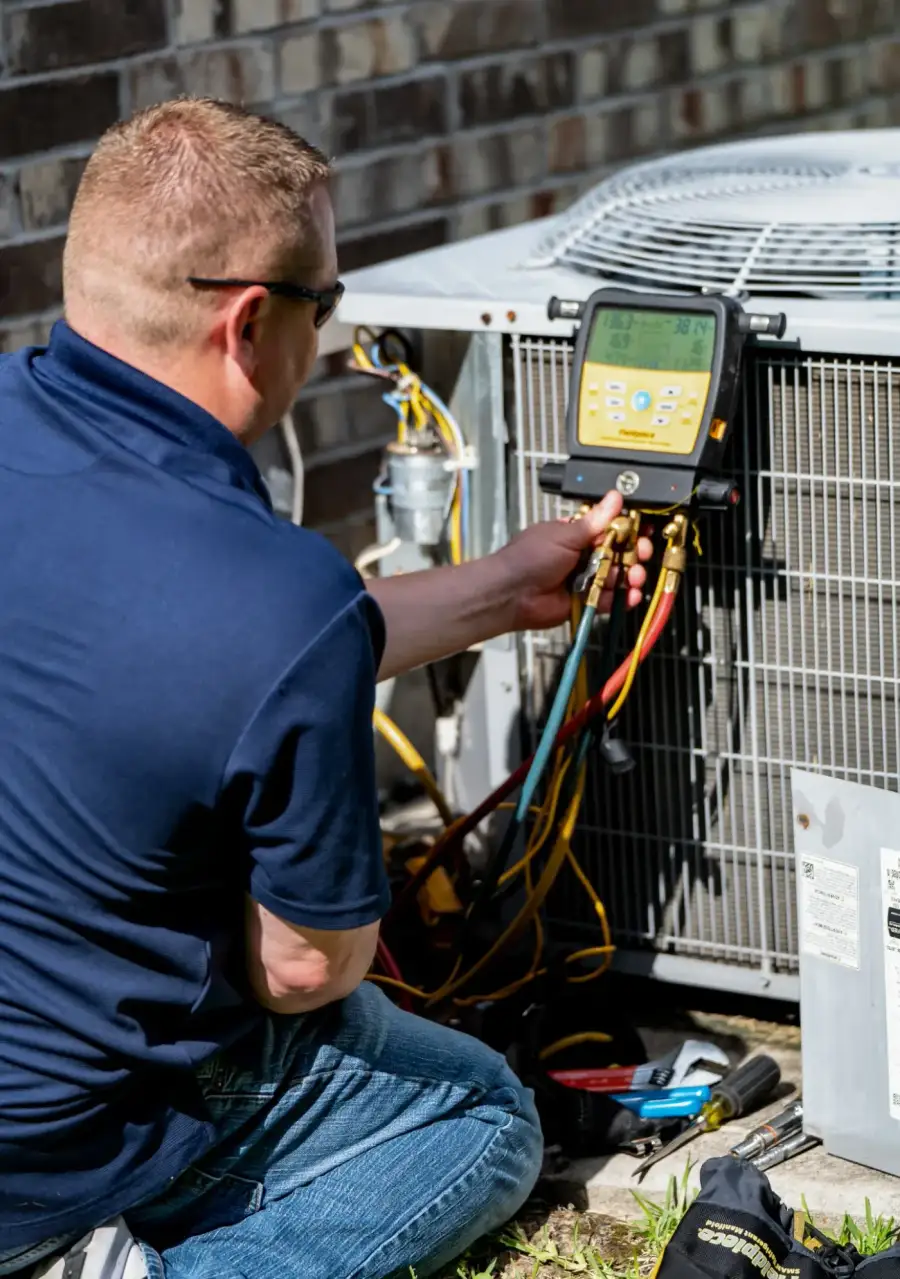
- ✓Commission the system and verify operation
- ✓Explain operation and maintenance to homeowners
Get Your Free HVAC Sizing Assessment
Don't guess about your home's heating and cooling needs. A professional load calculation costs far less than living with an improperly sized system—or replacing one that was wrong from the start.
Call AMW Cooling & Heating today at (936) 331-1339 for a free, no-obligation assessment of your Conroe home's HVAC needs.
We'll evaluate your home, perform accurate load calculations, and provide honest recommendations for equipment that will keep you comfortable for years to come. As a veteran-owned company, we take pride in doing the job right the first time.
AMW Cooling & Heating serves Conroe, The Woodlands, Montgomery, Willis, Spring, and surrounding Montgomery County communities with honest, professional HVAC service.